
© 2025 Fast Swim Academy
Swimmer’s shoulder surgery:
How Did I Recover In Less Than 3 Months

In this article, I’ll run you through my recovery process after a swimmer’s shoulder surgery.
You’ll learn:
- How fast can you go back to swimming
- What affects your recovery
- How to speed it up
If you are looking for an honest swimmer’s shoulder surgery experience, this article is for you.
Let’s dive in.
By Maria Rezhylo
3x World record holder in swimming & swim school owner
Jan. 22, 2023
Jan. 22, 2023
THIS IS NOT A MEDICAL ADVICE. The following post is documentation of my personal experience. Consult with the medical professional regarding your concerns.
THE MOST POPULAR QUESTION PEOPLE ASK ME
How long after laparoscopic surgery can I go swimming?
It takes 2 weeks for wounds to heal and for stitches to be removed. You can expect to shower after your stitches have been removed. After that, it’s still too early to go back to swimming due to the healing processes. Depending on the surgery, you can expect to go back to swimming after 6 weeks.
Relax and let your body heal! Don’t try to speed up the process by jumping into the swimming pool earlier than your doctor recommends. You may re-injure yourself, which will end your swimming career.
My swimmer’s shoulder surgery - why it happened
I underwent swimmer’s shoulder surgery in September 2022.
Before that, I struggled with shoulder pain for 2 years. During that time, I was misdiagnosed with, "Oh, you just have swimmer's shoulder." Doctors would give me a cortisone shot, tell me to do physical therapy, and call it a day. Boom, quick and easy fix.
But it never fixed anything.
Like many other swimmers, I pushed and pushed until I couldn’t. My left shoulder strength and performance started to decline, and pain meds wouldn't cut it. Eventually, I couldn’t swim more than 50 yards without a break.
In 2021, I thought, "It's pointless to swim like that." And went to another doctor. He looked at my MRI scans and concluded: shoulder bursitis, tendinitis, tendinopathy, and glenoid cyst. The doctor informed me that my shoulder needed at least 6 months to heal.
Fun.
I couldn't afford more than 2 months -- I had to prepare for big meets. So, I spent the next 8 months in misery, trying to do my best. That season wasn't pretty, but I can say I tried.
Once the season was over, I showed up at the doctor’s office again. This time, I already had a labrum tear among all of the above.
My doctor advised me that if the pain is a limiting factor and I want to keep swimming, I should get arthroscopic shoulder surgery.
Just like that, on September 22, I was at the hospital, preparing for the next chapter of my recovery.
Before that, I struggled with shoulder pain for 2 years. During that time, I was misdiagnosed with, "Oh, you just have swimmer's shoulder." Doctors would give me a cortisone shot, tell me to do physical therapy, and call it a day. Boom, quick and easy fix.
But it never fixed anything.
Like many other swimmers, I pushed and pushed until I couldn’t. My left shoulder strength and performance started to decline, and pain meds wouldn't cut it. Eventually, I couldn’t swim more than 50 yards without a break.
In 2021, I thought, "It's pointless to swim like that." And went to another doctor. He looked at my MRI scans and concluded: shoulder bursitis, tendinitis, tendinopathy, and glenoid cyst. The doctor informed me that my shoulder needed at least 6 months to heal.
Fun.
I couldn't afford more than 2 months -- I had to prepare for big meets. So, I spent the next 8 months in misery, trying to do my best. That season wasn't pretty, but I can say I tried.
Once the season was over, I showed up at the doctor’s office again. This time, I already had a labrum tear among all of the above.
My doctor advised me that if the pain is a limiting factor and I want to keep swimming, I should get arthroscopic shoulder surgery.
Just like that, on September 22, I was at the hospital, preparing for the next chapter of my recovery.
What is swimmer’s shoulder arthroscopy?
Swimmer’s shoulder arthroscopy is a minimally invasive surgery used by doctors to diagnose joint injuries. The surgeon will insert a narrow tube in the shoulder and see the joint on a high-resolution screen through a small camera. Then, the surgeon can complete all the required procedures through the same narrow tube.

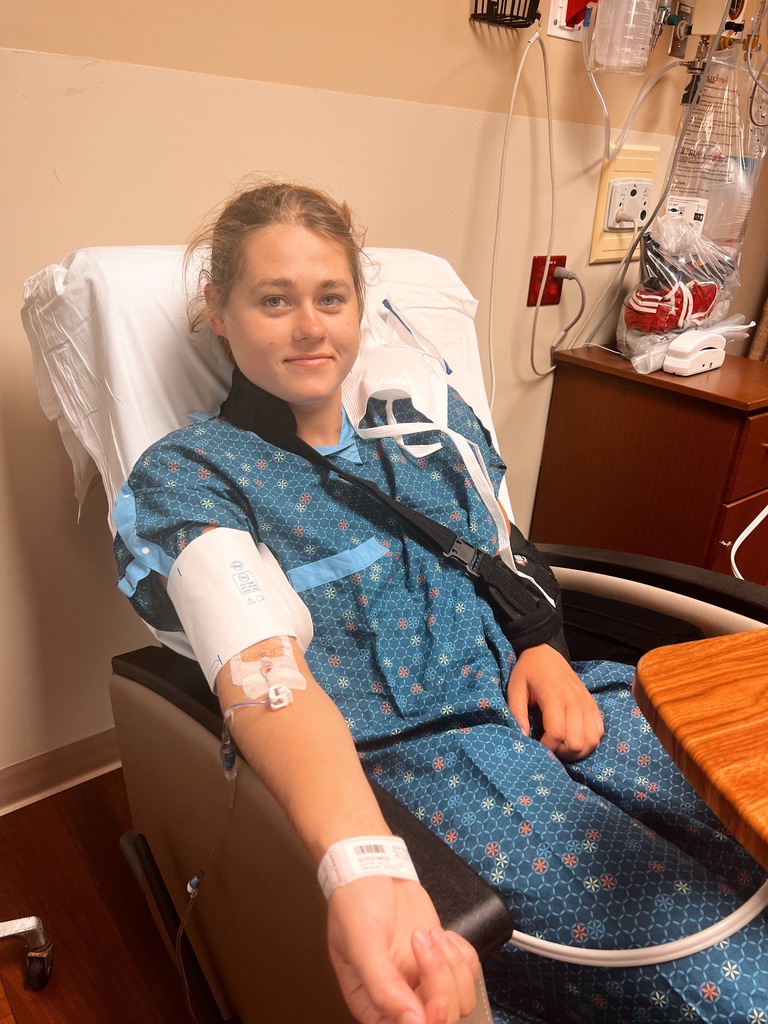
In fact, it wasn't bad at all. Yes, really. Thanks to doctor Makani who did a phenomenal job, now I live pain free.
P.S don't read comments on Reddit.
P.S don't read comments on Reddit.
How was it
My swimmer’s shoulder surgery was… Well, it was scary.
I had never had major surgery, so I didn’t know what to expect. So, I googled and read all the horror stories on the internet, which I don’t recommend.
We all are different, and mine or someone else’s story from the internet might not be the case for you. But it will make you more anxious for nothing. Instead, just trust your doctor.
My shoulder surgery experience wasn’t half as bad and painful as people wrote on the internet.
I had never had major surgery, so I didn’t know what to expect. So, I googled and read all the horror stories on the internet, which I don’t recommend.
We all are different, and mine or someone else’s story from the internet might not be the case for you. But it will make you more anxious for nothing. Instead, just trust your doctor.
My shoulder surgery experience wasn’t half as bad and painful as people wrote on the internet.
In conclusion: I spent 9 hours at the hospital. Half of the time, I was asleep. The best of it: I received a nerve-blocking shot before the surgery, which made me feel nothing for the entire day after it all was done.
However, there are some things that you should be prepared for once the surgery is over.
However, there are some things that you should be prepared for once the surgery is over.
Post swimmer’s shoulder arthroscopy hurdles & tips
1. Get a special pillow
Sleeping will be a challenge. Purchase a pillow for the post-shoulder surgery period beforehand. I doubted that I’d need it. Wrong. It made my sleeping with the sling so much better.
2. Get an icing machine or ice patches
It’ll most definitely help with the pain and discomfort you’ll have the first week.
Icing machines can be too pricey, but ice patches will get the job done just fine.
3. Don’t move
Don’t try to be a hero for the first few days after surgery. Instead, sleep, eat, and enjoy Netflix. Let your body get better after surgery.
4. Do wrist exercises
Get a squishy ball or another squeezing item for exercising. I got mine when leaving the hospital. Do it to get some blood flow running through your arm.
Swimmer’s shoulder arthroscopy recovery time
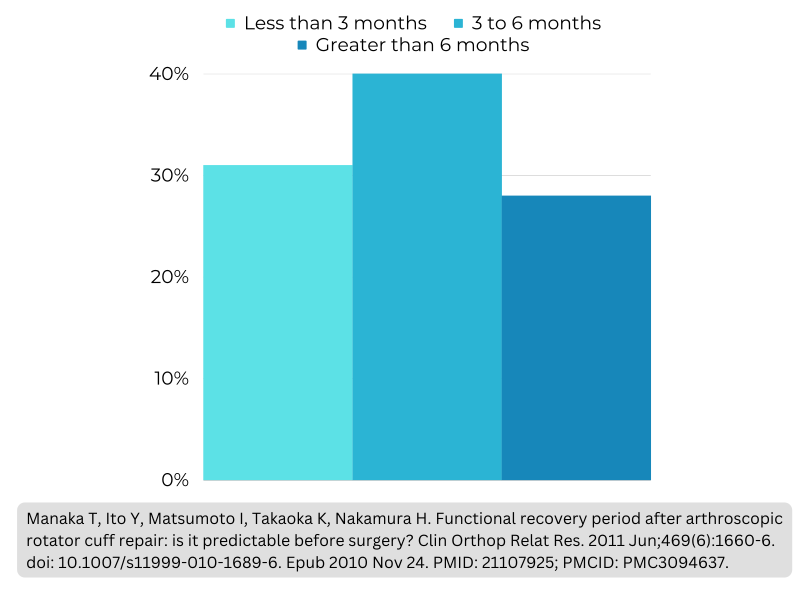
The average prognosis for shoulder arthroscopy recovery is 3 to 8 months. Unfortunately, you won’t be able to come back to easy and brief swimming earlier than 3 months due to the nature of the sport. Recent research indicates that, in most cases, functional recovery takes 6 months. Ultimately, the recovery period depends on the severity of the case, age, and physical fitness.
In my case
I started going to the gym 4 days post-surgery. Initially, I did some light cycling and progressively incorporated lower body exercises. My plan was to stay in shape without straining my body.
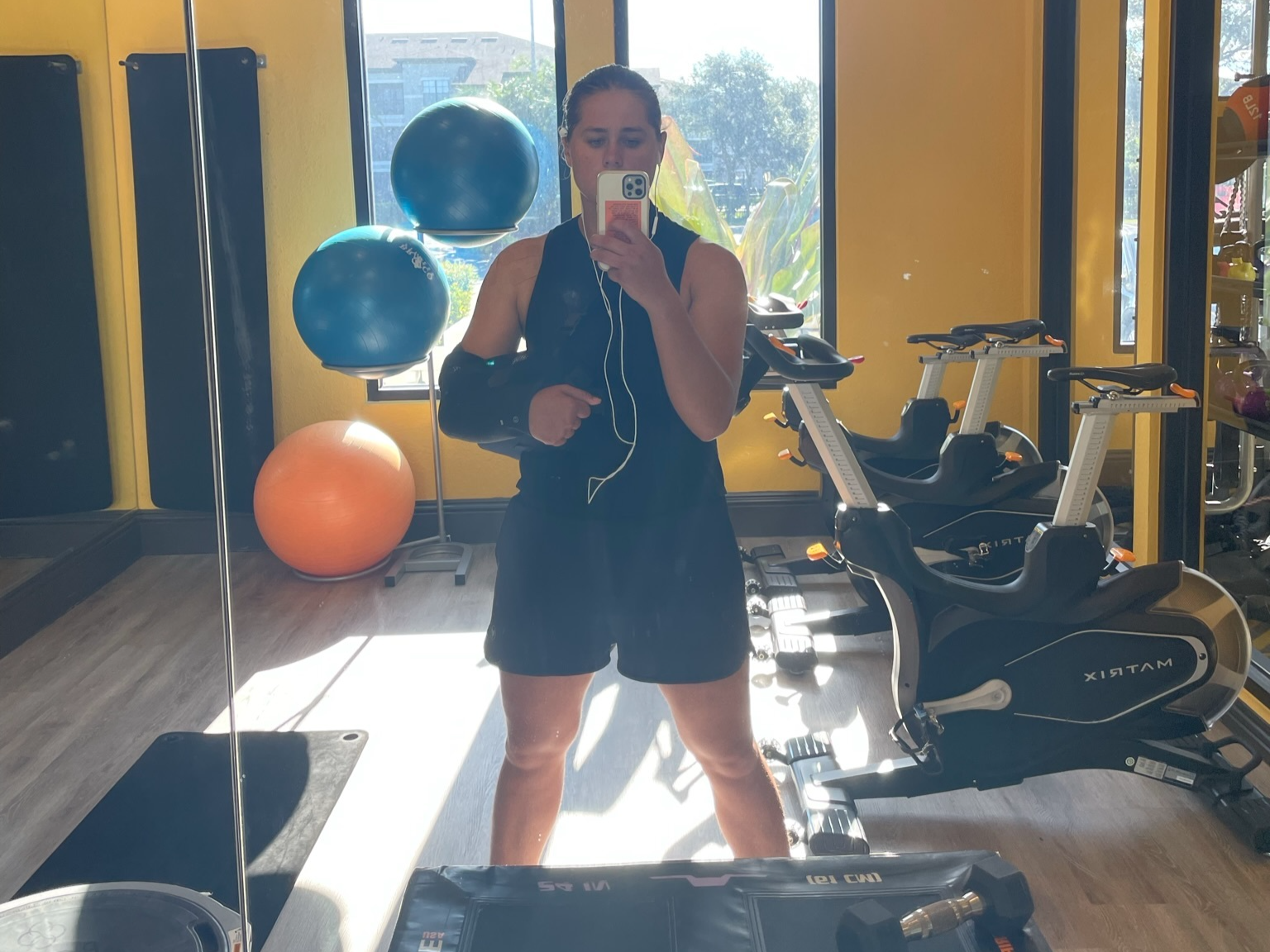
Six fix post-op, I started my physical therapy. Religiously, we focused on building back the strength of my left shoulder. To be expected, I felt the weakest I’ve felt in a few years.
In a few weeks of PT, my range of motion was almost back to normal. It took me about a month and a half to lift light weights again and two months to do my first pull-ups. Cool.
Okay, enough of bragging.
Note that I followed the recovery protocol and didn’t push my body to do something I wasn’t cleared to do. My recovery time was rather speedy than regular, so don’t try to do the same. Re-injuring equals going through all of this again.
Note that I followed the recovery protocol and didn’t push my body to do something I wasn’t cleared to do. My recovery time was rather speedy than regular, so don’t try to do the same. Re-injuring equals going through all of this again.
And then I went swimming
After 2 months of attending physical therapy, my therapist cleared me to swim. Just a few laps to see how I feel. I did 1000 meters, so almost a few laps.
That swim was weird and uncomfortable. But it wasn’t as bad as I had imagined.
Technique and timing were off, but not terribly. Surprisingly, power per stroke remained about the same.
But that’s just small details. What’s more important: I didn’t feel any pain.

It was a truly freeing feeling going through the motion without excruciating pain.
All of that was achieved in 3 months after one small surgery, regular physical therapy, and a lot of patience.
All of that was achieved in 3 months after one small surgery, regular physical therapy, and a lot of patience.
What helped me to get back faster
1. Being mindful
And I don’t mean meditation. I proceeded to do new things with caution. I checked in with my physical therapist and doctor beforehand for their clearance.
2. Staying active
Recent research proves that staying active before and after surgery can significantly speed up functional recovery. That’s why I worked out 3 to 4 times per week, even in a sling.
3. High-quality recovery
I focused on fueling my body with good quality foods, drinking plenty of water, and getting adequate sleep. You can’t underestimate the importance of simple things like that. Create an environment in which your body can heal to the max.
4. Letting it go
I had no clue how long this process was going to take. And, I made peace with it. Whether it's 3, 6, or 8 months didn't matter to me. Living in pain is worse than not swimming for a couple of months.

Conclusion
We, as athletes, sometimes push our bodies too far for too long. In retrospect, I could have easily avoided this surgery.
Have you experienced any severe injuries because of swimming?
How did you handle it?
Let me know in the comments below!
Have you experienced any severe injuries because of swimming?
How did you handle it?
Let me know in the comments below!
Get All the Essential Tips and Stories from a 3x World Record Holder in swimming